
Region
Uttarakhand
Duration
9 Nights / 10 Days
Ride Distance
approx ~750 km + 5 treks
Tour Grade
Moderate to Challenging
Overview
The Panch Kedar Bike Trip is one of the most sacred and demanding pilgrimage circuits in the Himalayas — a journey to all five Kedar shrines of Lord Shiva: Kedarnath, Tungnath, Rudranath, Madhyamaheshwar, and Kalpeshwar. Legend has it that after the Mahabharata war, the Pandavas sought Lord Shiva’s forgiveness for the sin of fratricide. Shiva evaded them by taking the form of a bull and diving into the earth at Guptkashi, and his body parts are said to have reappeared at these five locations — giving rise to the Panch Kedar Yatra.
Short Itinerary (9N/10D)
Day 1: Arrival Rishikesh/Haridwar, evening Ganga Aarti
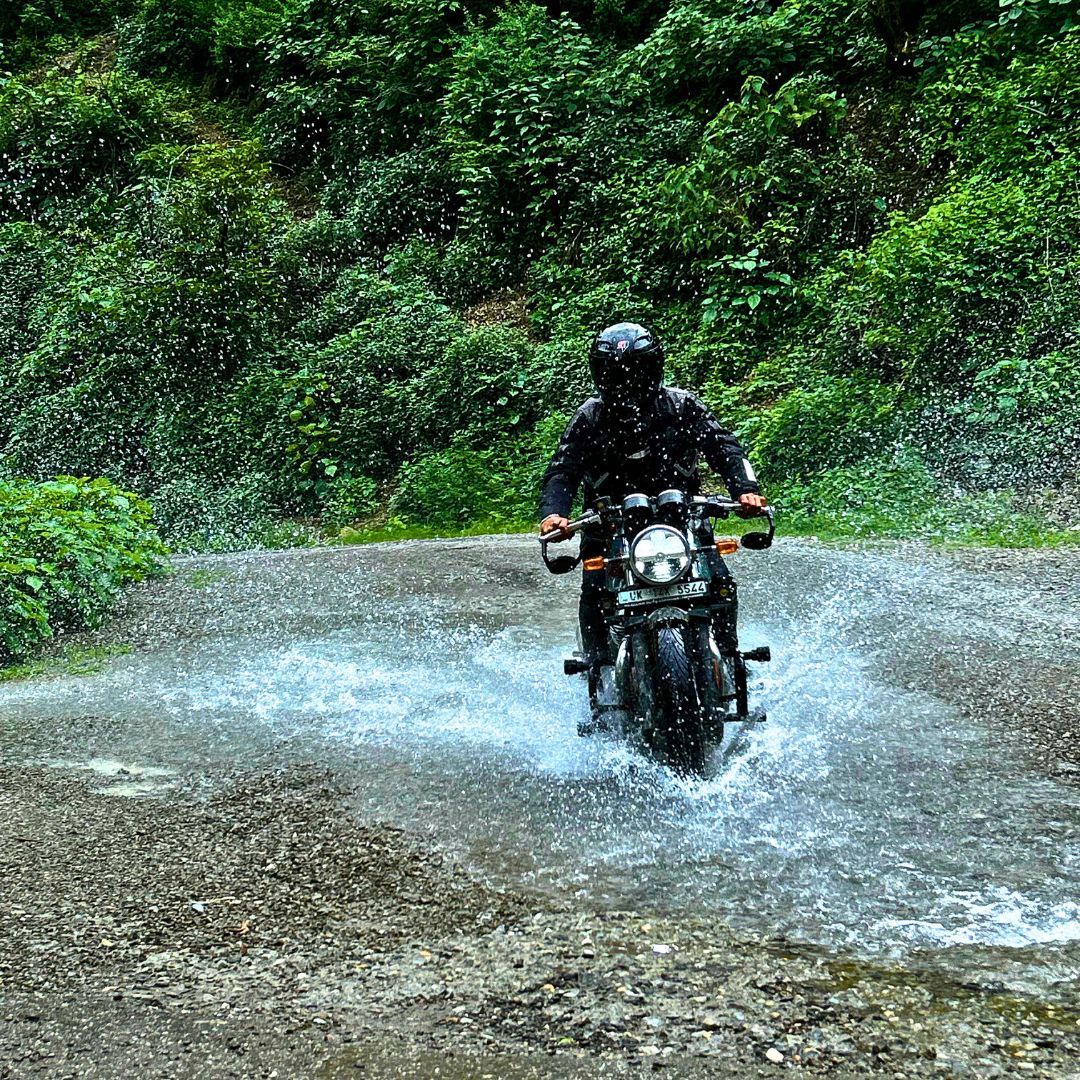
Day 2: Ride Rishikesh – Helang/Urgam Valley (approx. 220 km)
Day 3: Kalpeshwar Darshan (easy 2 km walk), ride to Sari/Chopta (approx. 100 km)
Day 4: Trek Chopta – Tungnath – Chandrashila – back to Chopta (8 km round trek)
Day 5: Ride Chopta – Sagar Village (approx. 60 km), Rudranath trek briefing
Day 6: Trek Sagar – Rudranath (20 km one way), darshan, overnight near Panar Bugyal
Day 7: Trek back to Sagar, ride to Gaundar/Ransi Village
Day 8: Trek Gaundar – Madhyamaheshwar (16 km), darshan, return to Gaundar
Day 9: Ride Gaundar – Guptkashi – Gaurikund, trek to Kedarnath (16 km)
Day 10: Kedarnath darshan, trek down, drive back to Rishikesh/Haridwar, departure
Detailed Itinerary
Arrive in Rishikesh or Haridwar and check into your hotel. Bike handover, safety briefing, and a full run-through of the 10-day route and trekking sections. In the evening, witness the Ganga Aarti at Triveni Ghat. Overnight stay in Rishikesh/Haridwar.
Ride out along the Ganga to Devprayag, then continue via Srinagar and Rudraprayag, following the Alaknanda River upstream. Push on towards Helang and turn off into the Urgam Valley, the gateway to Kalpeshwar. Overnight stay in Urgam/Helang.
Kalpeshwar is the only Panch Kedar shrine accessible without a serious trek — a short, scenic 2 km walk through the Urgam Valley’s apple orchards and cascading streams leads to the cave temple where Lord Shiva’s matted locks (jata) are worshipped. After darshan, ride back down and across to Sari village, the base for Chopta and Tungnath. Overnight stay in Chopta/Sari.
Trek from Chopta to Tungnath, the highest Shiva temple in the world at 3,680 m, where Lord Shiva’s arms (bahu) are worshipped. Continue further up to Chandrashila summit for a 360-degree view of the Himalayan range, including Nanda Devi, Trishul, and Kedarnath peaks. Descend back to Chopta by evening. Overnight stay in Chopta.
A shorter riding day through forested mountain roads to Sagar village, the base for the Rudranath trek — the most remote and physically demanding of the five. Evening briefing and early rest ahead of tomorrow’s long trekking day. Overnight stay in Sagar.
The toughest leg of the journey. The trail climbs through dense forest, past Pung Bugyal and Panar Bugyal, before reaching Rudranath (2,286 m), where Lord Shiva’s face (mukh) is worshipped amid a stunning alpine meadow ringed by snow peaks. Darshan at the temple, then overnight stay near Panar Bugyal or Rudranath (guesthouse/tented camp).
Trek back down to Sagar village, then ride onward to Gaundar or Ransi, the base village for Madhyamaheshwar. Overnight stay in Gaundar/Ransi.
An early-morning trek through the Madhyamaheshwar Valley — one of the most scenic and least crowded trails in the region — to the temple at 3,289 m, where Lord Shiva’s navel (nabhi) is worshipped, framed dramatically by the Chaukhamba peaks. Darshan, then trek back down to Gaundar. Overnight stay in Gaundar.
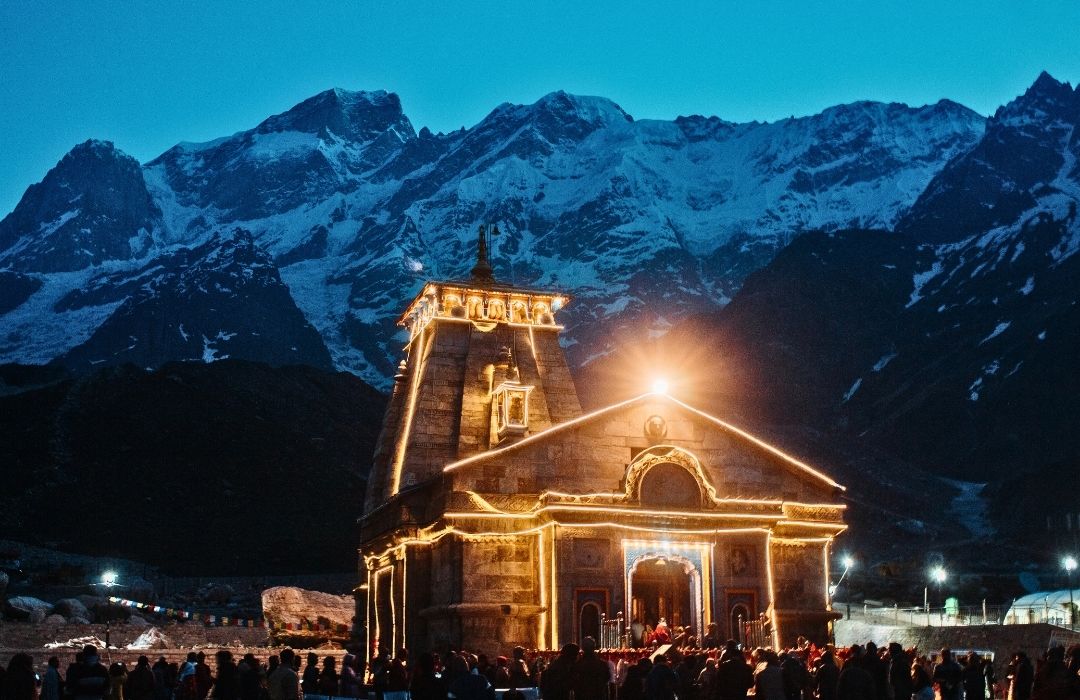
Ride via Guptkashi to Gaurikund, the trek base for Kedarnath. From here, trek 16 km alongside the Mandakini River up to Kedarnath (3,583 m), the final and most revered of the five shrines, where Lord Shiva’s hump (linga) is worshipped. Attend the evening Aarti at the temple. Overnight stay at Kedarnath (guesthouse/dharamshala).
Early morning darshan at Kedarnath Temple, one of the twelve Jyotirlingas. Trek back down to Gaurikund and drive back towards Rishikesh/Haridwar, where the journey concludes — having completed all five Kedars of the Panch Kedar Yatra.
Inclusions – Everything We Take Care Of
- Accommodation in hotels/camps/guesthouses on twin/triple sharing
- Breakfast & Dinner during the tour
- Inner Line Permits for restricted areas
- Backup vehicle for luggage & support
- Experienced tour leader & mechanic
- First-aid and oxygen support
Exclusions – What’s Not Included?
- Personal expenses (snacks, mineral water, shopping)
- Bike fuel & riding gear (unless included in package)
- Travel insurance & medical expenses
- Any additional transport not mentioned in itinerary
- GST & entry fees at monuments/temples

FAQs – We’ve Got All Your Questions Covered!
No. This route combines long mountain riding days with five separate treks, some at high altitude. It’s best suited to riders with prior Himalayan riding experience and a reasonable fitness level for trekking.
Rudranath, at 20 km one way through remote forest and meadow terrain, is the most physically demanding. Madhyamaheshwar and Kedarnath are moderate, while Tungnath and Kalpeshwar are relatively easy.
Yes, Inner Line Permits are required for certain stretches. The tour operator arranges these.
May–June and September–October. The shrines are closed in winter due to heavy snowfall, and July–August is avoided due to monsoon landslide risk.
Warm clothes, trekking shoes, personal medicines, raincoat, torch, valid ID proof.
Tour Details
- Duration: 9 Nights / 10 Days
- Region: Uttarakhand (Garhwal Himalayas)
- Starting Point: Rishikesh / Haridwar
- Ending Point: Rishikesh / Haridwar
- Total Ride Distance: ~750 km (round trip)
- Total Trek Distance: ~62 km across five treks
- Highest Altitude: Tungnath/Chandrashila (~4,000 m)
- Tour Grade: Moderate to Challenging (mix of riding & trekking)
- Best Season: May – June & September – October
- Accommodation: Hotels, guesthouses, tented camps (basic to comfortable)
- Meals: Vegetarian (Breakfast & Dinner included)
Tour Highlights
- Complete all five sacred shrines of the Panch Kedar Yatra in one trip
- Ride through Garhwal Himalayas along the Ganga and Alaknanda river valleys
- Trek to Tungnath, the world’s highest Shiva temple, and Chandrashila summit
- Reach remote Rudranath through forests and high-altitude bugyals
- Darshan at Madhyamaheshwar, framed by the Chaukhamba peaks
- Final darshan at Kedarnath, one of the twelve Jyotirlingas
- Stay in remote mountain villages rarely visited by tourists
- Deep dive into Garhwali culture, mythology, and mountain life
Route & Region
- Region: Uttarakhand, Garhwal Himalayas
- Major Stops: Rishikesh – Devprayag – Rudraprayag – Helang – Urgam (Kalpeshwar) – Chopta (Tungnath) – Sagar (Rudranath) – Gaundar (Madhyamaheshwar) – Guptkashi – Gaurikund (Kedarnath) – Rishikesh
- Rivers Enroute: Ganga, Alaknanda, Mandakini
- Terrain: Mountain highways, winding passes, and five distinct trekking sections